Background
A PC racing game needed its controls rebuilt from scratch for mobile
Stampede: Racing Royale is a live service, 60-player kart racing game. When porting it to mobile, one of the highest-priority tasks was translating the gamepad and keyboard controls to a touchscreen without losing the feel of the game.
I led the UX design for mobile controls, working alongside a game designer.
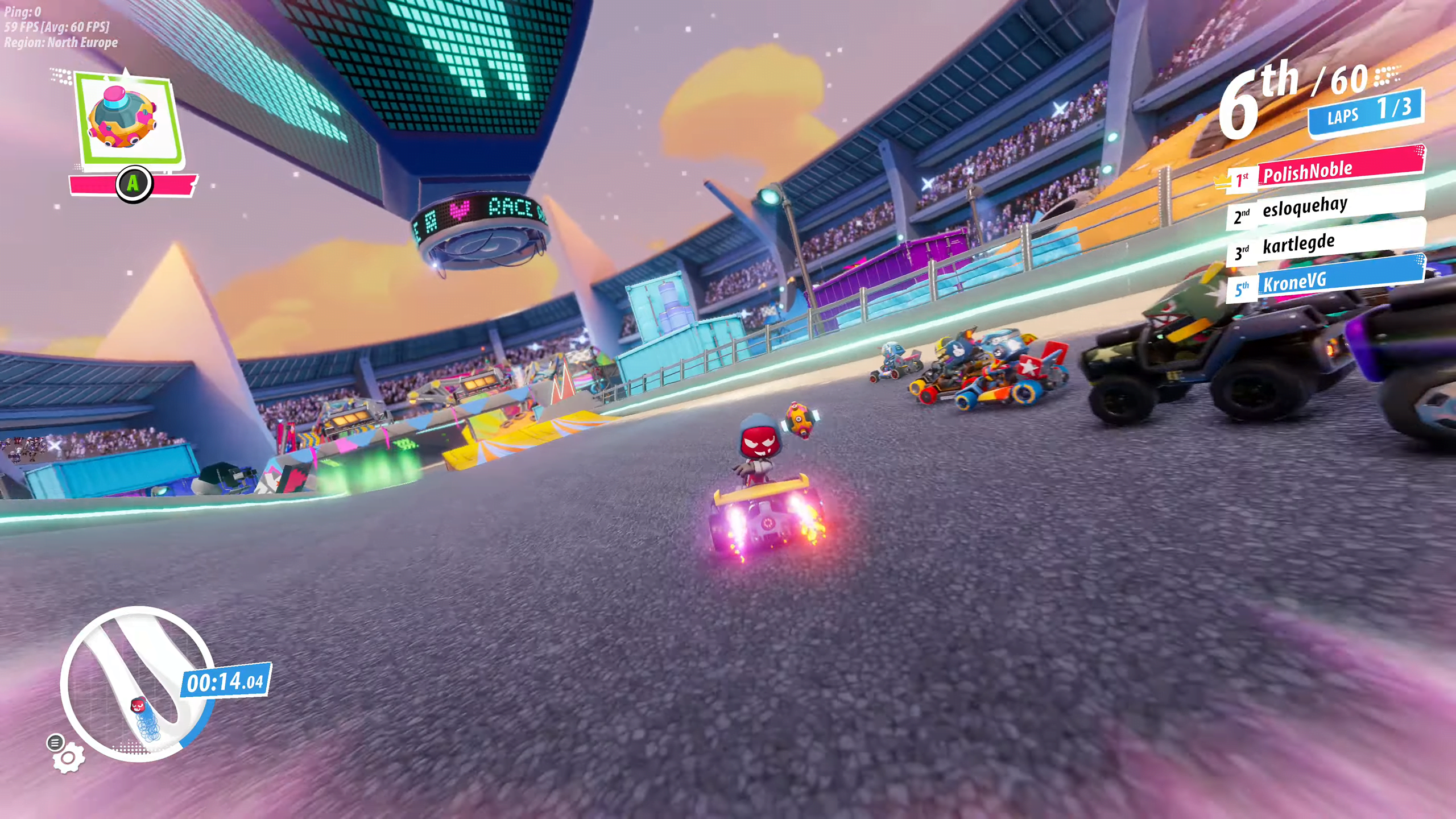
Stampede: Racing Royale PC gameplay
Research
Every top mobile kart game offered more than one way to steer
We conducted a competitor analysis of the top mobile kart racing games, documenting their features, strengths, and weaknesses. Two patterns emerged consistently across the market:
- All games used auto acceleration, removing one control variable entirely
- The vast majority offered two or more control presets, letting players choose how they steer
This pointed to a clear direction: rather than designing one universal control scheme, we should design two presets and let players decide. We named them Classic (one-handed steering) and Refined (two-handed steering).
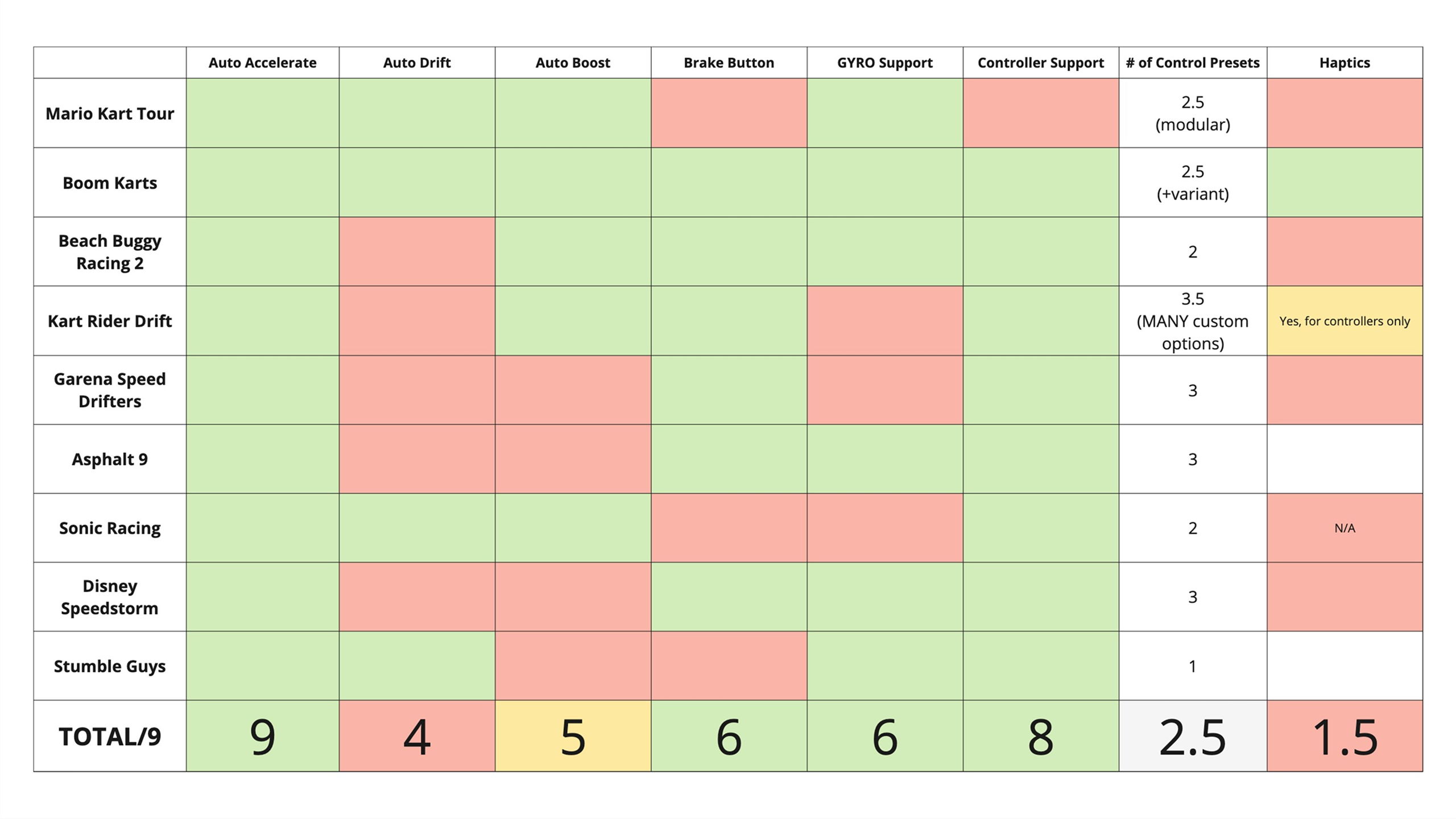
Competitor analysis matrix
Design
Two presets, playtested with 20 participants
We wireframed both presets and worked with the UI and engineering teams to get them prototyped for usability testing. We invited 20 external participants to race with both control schemes and score steering, drifting, and power-up usage from 1 to 5.
Preferences were evenly split between presets, but both scored poorly enough to require iteration. The feedback was specific:
- Controls were overly sensitive
- Some buttons were too small to hit reliably
- Buttons positioned along the thumb curve blocked too much of the screen
We moved buttons to the screen edges, reduced HUD complexity in Refined by turning the whole half-screen into a tap zone, and increased touch target sizes across both presets.
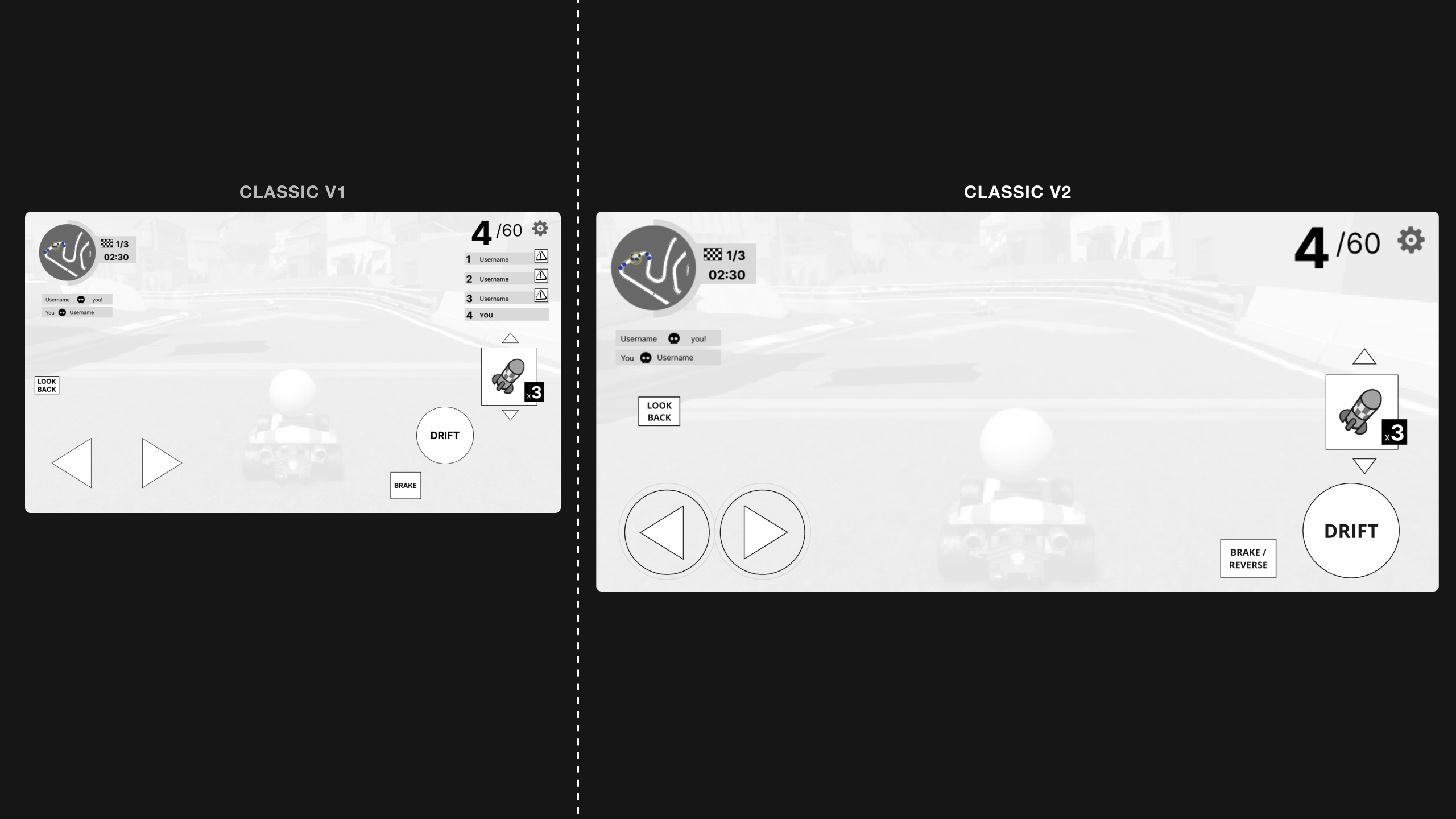
Classic controls iteration
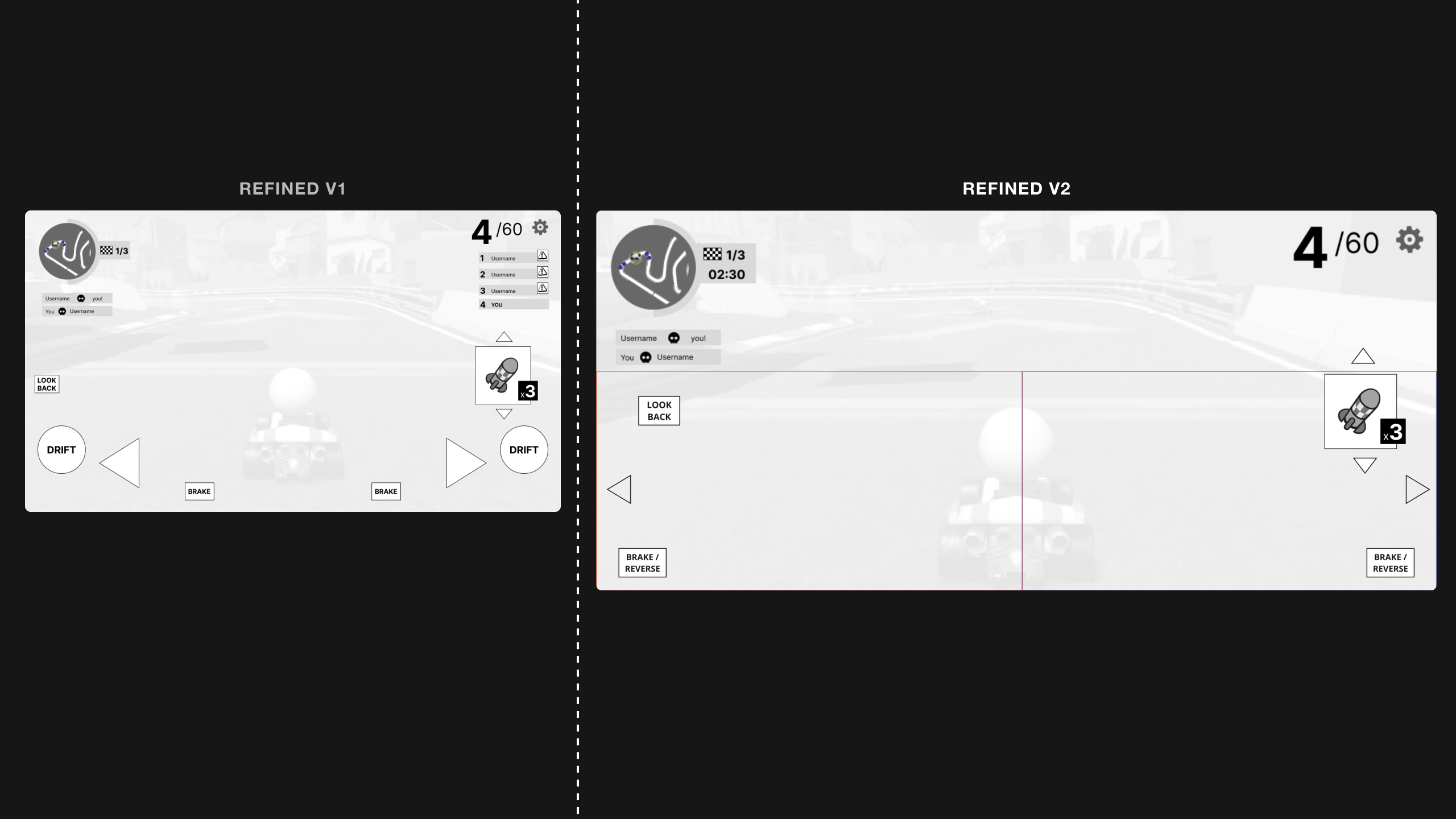
Refined controls iteration
Outcome
Iterated designs validated by further rounds of user testing
A second round of playtests confirmed the changes landed. Participants noted that the larger touch targets and repositioned buttons were significantly easier to use under pressure, and improved icon readability reduced errors on power-ups and drifting.
The two-preset model also held up. Users valued the ability to choose the scheme that matched how they wanted to play, rather than being forced to adapt to a single layout.
Although the mobile version was ultimately deprioritised before release, key design patterns were carried through to the final PC version which shipped in 2024.
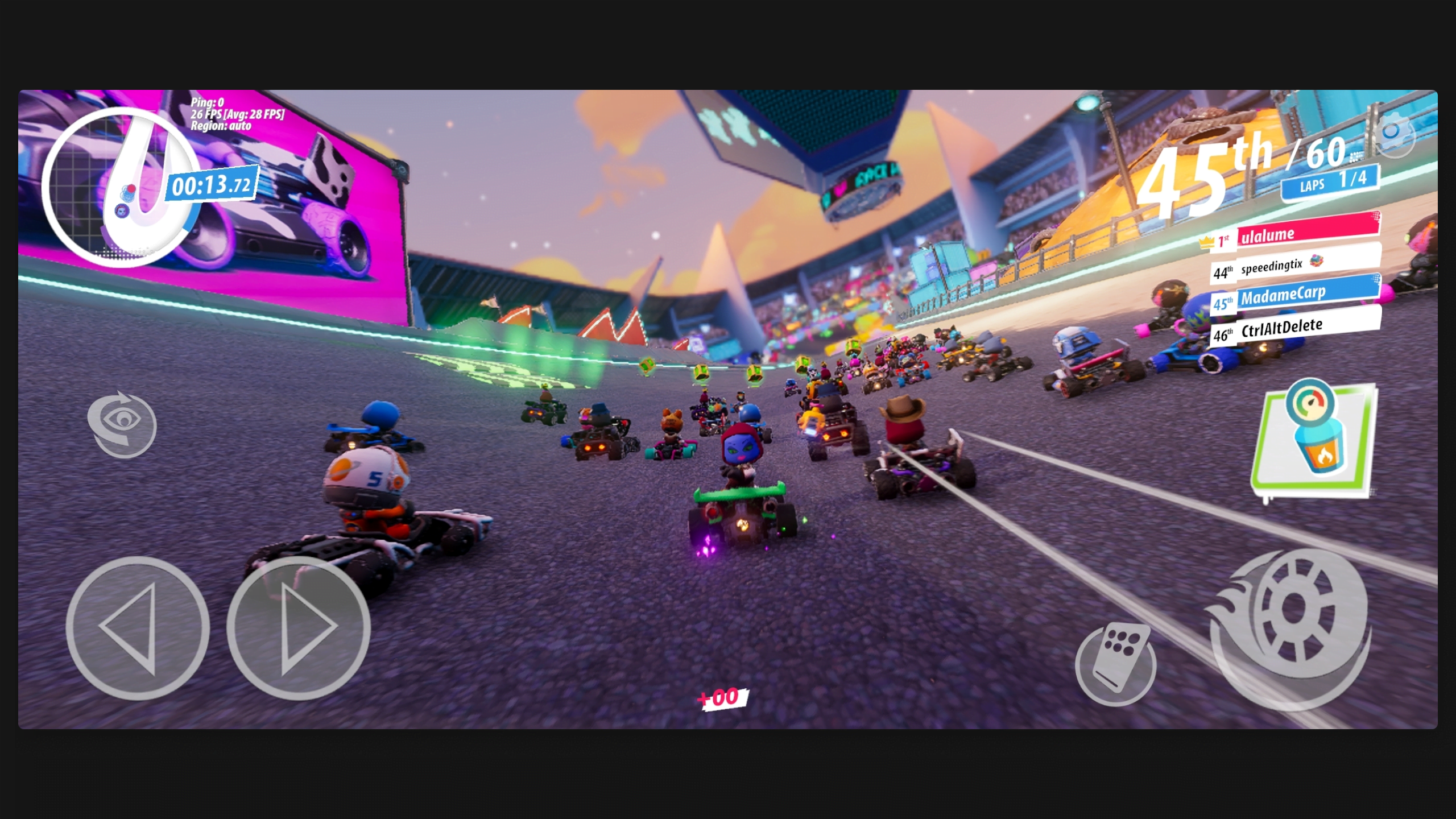
Classic controls — final design
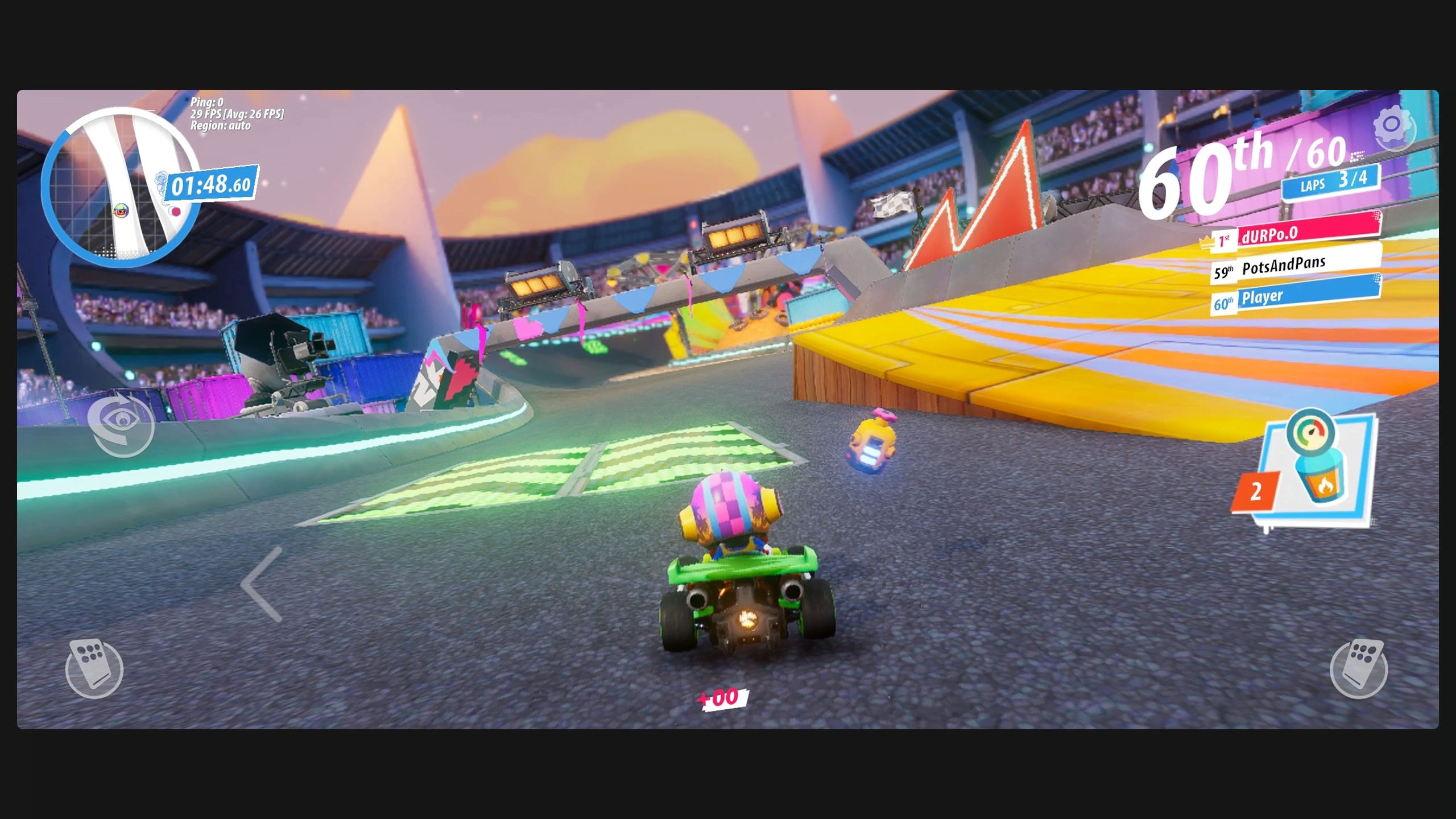
Refined controls — final design